Screenshots from the Game
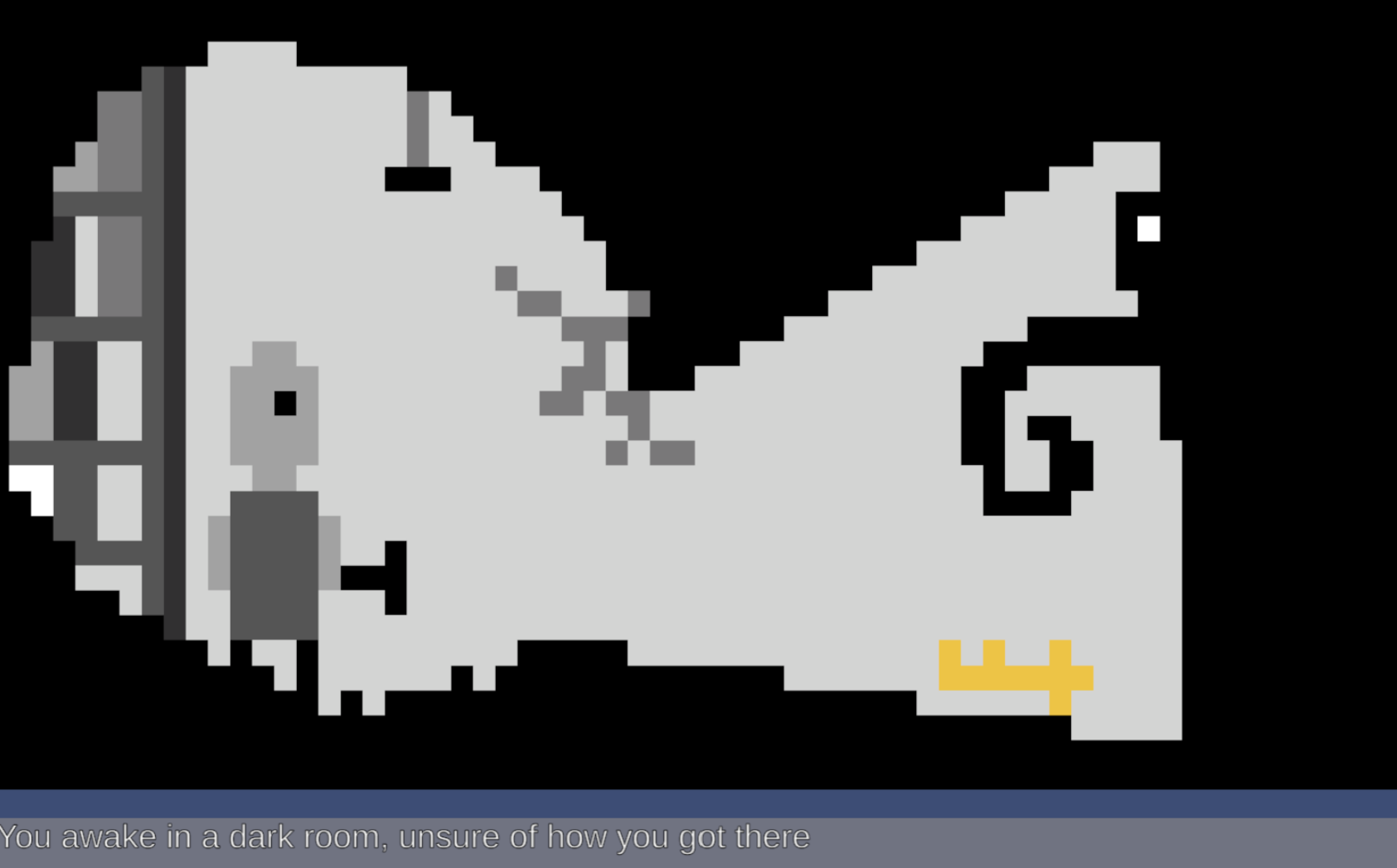
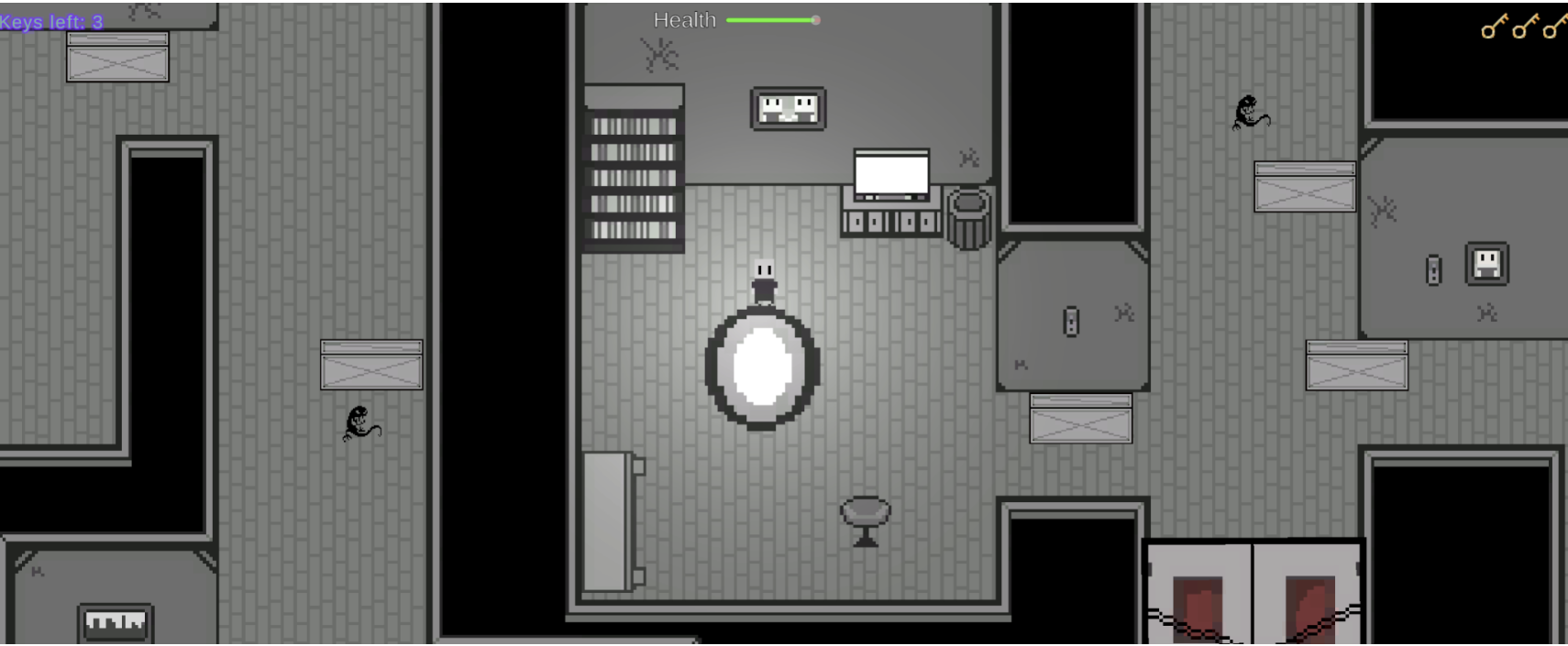
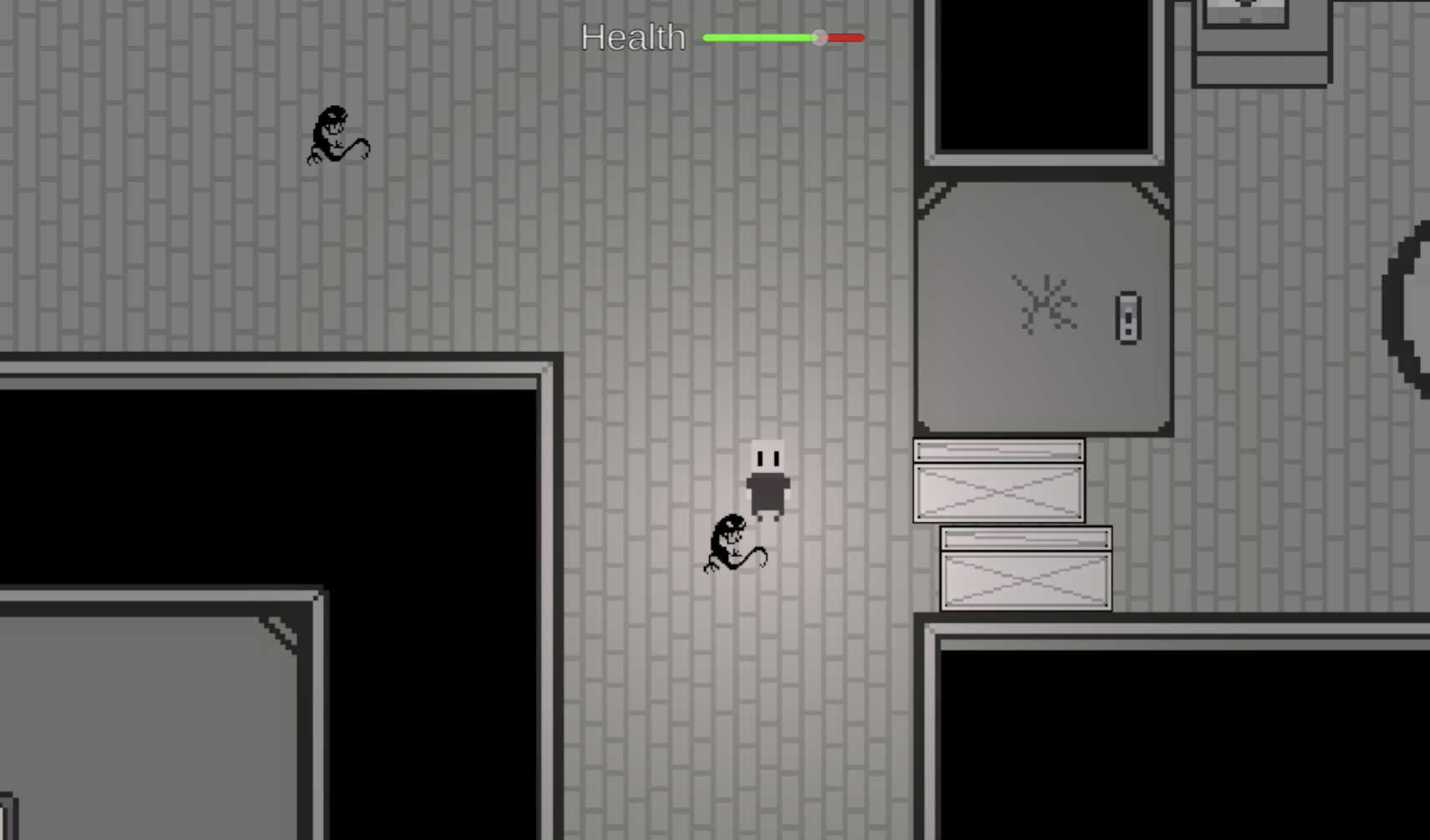
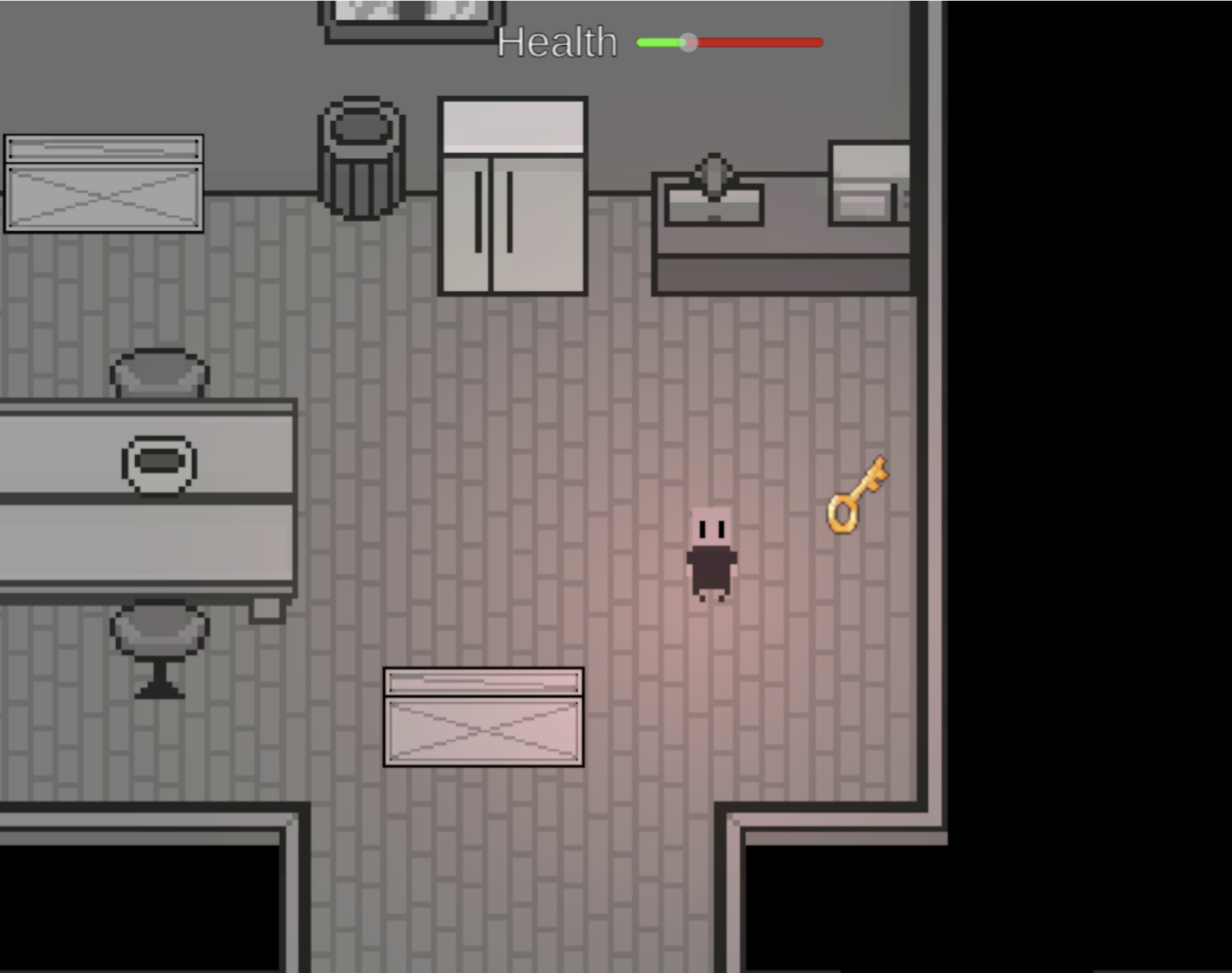
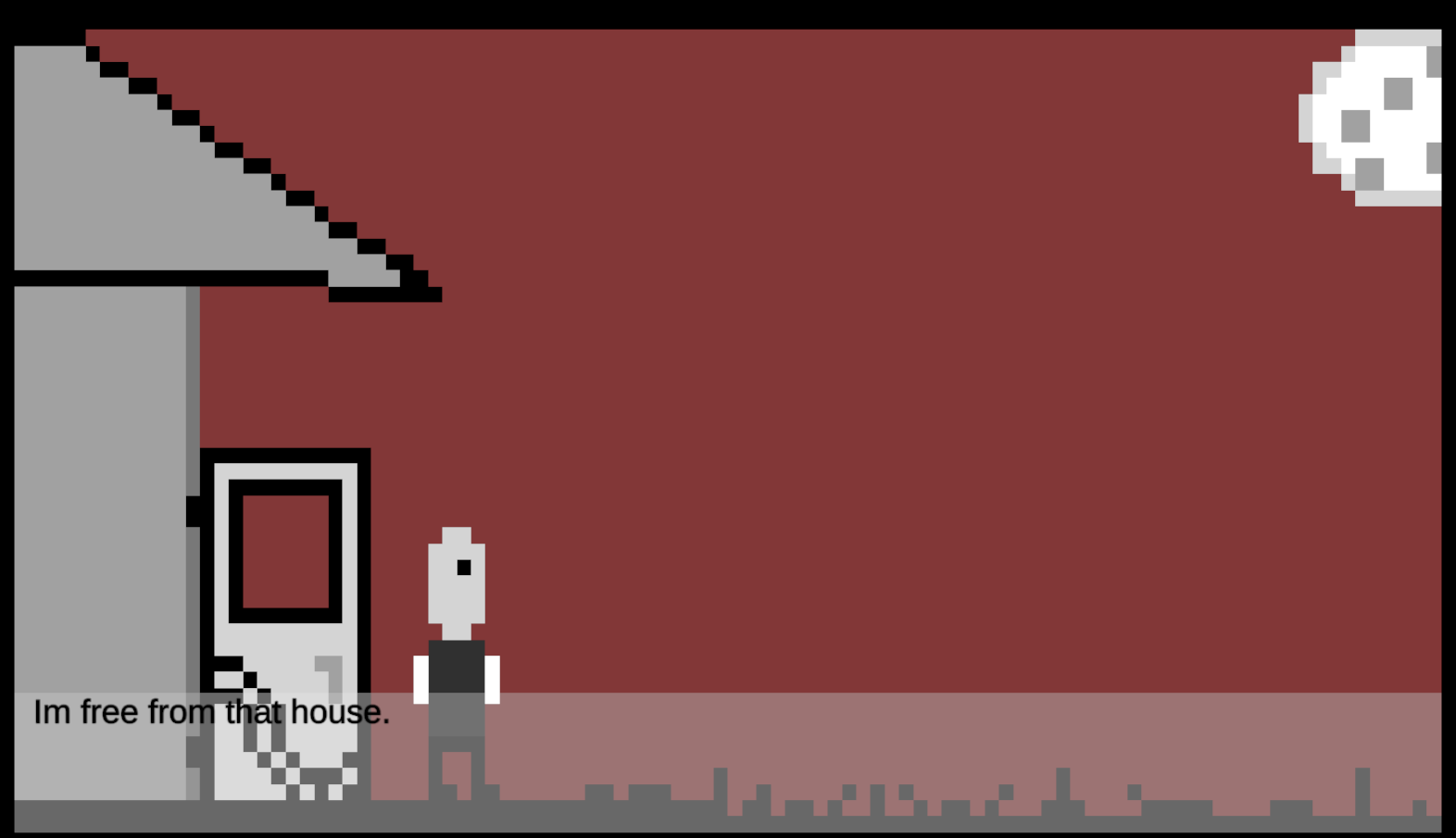
A 2D Horror Escape Game
▶️ Play the GameYou play as a kid trapped in a haunted house by your own family. Your goal is to find hidden keys, avoid chasing ghosts, and unlock your way to freedom.
We conducted five rounds of playtesting across different phases of the game's development. Each round provided valuable feedback that guided our design and implementation decisions. Click on each phase to learn more:
At this stage, we had a basic map and a movable player character using arrow keys or WASD.
Testers responded positively to the map layout, but the common feedback was the lack of gameplay mechanics.
We planned to add at least two core mechanics before the next round of testing.
In this phase, we implemented partial ghost and key mechanics. However, there were no lock or door systems yet, so keys would simply respawn after being picked up.
Testers suggested improving the ghost behavior, adding doors, and including start and end screens.
We prioritized polishing ghost and key mechanics first before introducing locks/doors, and started planning to add sound effects like walking and ambient sounds.
By alpha, ghost mechanics were functional, and we introduced temporary lock and door systems to allow the game to end after collecting keys. We also fixed key spawning so keys would only appear in accessible zones, not inside walls or furniture.
Testers requested a tutorial/start screen and an improved ending.
Focus next on user interface elements like start and end screens, and enhance lighting to improve the atmosphere.
In this phase, we added pixel-art style locks and doors, along with sound effects for unlocking. A health bar and red lighting effects were introduced to visually reflect damage taken from ghosts. We also added sound effects for damage and key collection.
Testers appreciated the improvements but wanted more interactivity.
We decided to work on a tutorial screen and implement a new box mechanic, allowing players to block or hide from ghosts.
The final version included the box-pushing mechanic, a tutorial screen, and an ending scene to complete the game's story.
Some players suggested improvements to the health bar UI, enabling mouse interaction (as using "E" with WASD was difficult), adding more levels, and fixing a bug where keys sometimes spawned under boxes.
These insights will guide potential future updates and polish.
Explore our comprehensive presentation that covers the inspiration, mechanics, challenges, and theme of Key To Escape.
One thing our team did really well was starting early and having thorough discussions about our game concept. We held 2–3 meetings early in the process to align on the type of game we wanted to build, assign roles, choose tools like version control, and set clear goals. This early planning helped us stay organized and ensured everyone knew their responsibilities from the beginning.
Evidence of this includes our initial prototype, which was completed early, and the detailed meeting notes we took during our planning sessions. Additionally, we maintained strong communication throughout the project, regularly updating each other on progress and challenges.
If we had another 2 weeks to work on this game, the following would be the top 3 priority items:
Check out our project on GitHub: 📦 View Source Code